“A Matter of Survival”: South Korean President Urges Public Health Coverage for Hair Loss
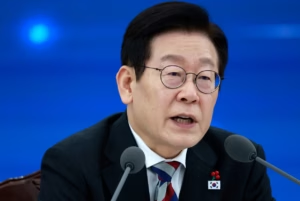
South Korean President’s call to include hair loss treatment under public health insurance has ignited a nationwide debate that cuts across healthcare policy, social pressure, economic inequality, and the intense beauty standards that define modern South Korean society. Framing the issue as a “matter of survival” for many citizens, the president’s remarks have elevated what was once considered a cosmetic concern into a question of public well-being and mental health.
The proposal, while welcomed by some as long-overdue recognition of a serious social issue, has also drawn criticism from those who argue that limited healthcare resources should be reserved for life-threatening conditions. The controversy highlights how deeply appearance, identity, and economic stress are intertwined in South Korea—and why hair loss has become far more than a vanity issue.
A Statement That Sparked a National Conversation
The president’s comments came during a public policy discussion on expanding healthcare access and addressing quality-of-life issues. In an unusually candid moment, he described hair loss as a problem that can threaten livelihoods, relationships, and mental health, particularly in a society where appearance often plays a decisive role in employment and social mobility.
By calling it a “matter of survival,” the president signaled that hair loss should be viewed through a broader lens—one that includes psychological distress, workplace discrimination, and the financial burden of long-term treatment.
Within hours, the statement dominated headlines, social media platforms, and political talk shows, triggering both praise and ridicule in equal measure.
Why Hair Loss Is a Big Issue in South Korea
South Korea is globally known for its beauty industry, cosmetic surgery culture, and highly competitive job market. In this environment, physical appearance is often seen as a form of social capital.
Hair loss, particularly among young men and increasingly among women, is widely stigmatized. Studies and surveys in South Korea have shown that individuals experiencing hair loss often report:
- Lower self-esteem
- Increased anxiety and depression
- Discrimination during job interviews
- Social withdrawal and relationship difficulties
In a country where job applications frequently include photographs and where grooming standards are closely scrutinized, hair loss can become a significant disadvantage.
For many young adults, especially men in their 20s and 30s, early-onset hair loss is associated with fear of falling behind peers in both professional and personal life.
The Financial Burden of Treatment
Hair loss treatments in South Korea are widely available but largely excluded from the national health insurance system. Patients typically pay out of pocket for:
- Prescription medications
- Dermatology consultations
- Long-term maintenance therapies
- Hair transplants, which can cost thousands of dollars
Because hair loss treatments often require continuous use over many years, costs can accumulate quickly. Critics of the current system argue that this creates inequality, where only wealthier individuals can afford effective treatment.
The president’s proposal aims to reduce this burden by offering partial or full public insurance coverage for medically diagnosed hair loss, particularly cases linked to stress, hormonal imbalance, or underlying health conditions.
Mental Health and Quality of Life
Supporters of the proposal emphasize the mental health dimension of hair loss. Psychiatrists and psychologists in South Korea have increasingly highlighted the link between appearance-related stress and mental health disorders.
For some individuals, hair loss contributes to:
- Chronic stress
- Social anxiety
- Depressive symptoms
- Reduced productivity
In extreme cases, individuals report avoiding public spaces or abandoning career ambitions altogether. Advocates argue that if mental health treatment is covered by public insurance, then conditions that significantly contribute to mental distress should also be included.
From this perspective, hair loss is not merely cosmetic—it is a quality-of-life issue with real psychological consequences.
Political Strategy or Genuine Concern?
Opposition parties and political analysts have questioned the timing and motivation behind the president’s remarks. Some critics argue that the proposal is designed to appeal to younger voters, particularly men, ahead of upcoming elections.
Hair loss has become a surprisingly prominent political topic in South Korea in recent years, with candidates referencing it in campaigns to connect with voters facing intense social pressure.
Skeptics accuse the government of prioritizing popularity over policy substance, suggesting that limited healthcare funds should be directed toward aging-related illnesses, chronic diseases, or underfunded medical services.
However, supporters counter that addressing everyday struggles is precisely what responsive governance should do—and that dismissing hair loss as trivial reflects outdated views of health.
Public Reaction: Divided but Engaged
Public reaction has been sharply divided.
Supporters argue:
- Hair loss has real psychological and social consequences
- Public insurance already covers other quality-of-life treatments
- Preventive care may reduce long-term mental health costs
- The stigma around hair loss needs to be challenged
Critics argue:
- Hair loss is not life-threatening
- Healthcare budgets are already stretched
- Coverage could open the door to other cosmetic claims
- The phrase “matter of survival” exaggerates the issue
Despite disagreement, the debate has succeeded in drawing unprecedented attention to the emotional and economic impact of hair loss.
Medical Community Weighs In
Medical professionals have offered more nuanced perspectives. Dermatologists note that not all hair loss is cosmetic; some cases are linked to autoimmune diseases, hormonal disorders, or side effects of medical treatment.
They suggest that a tiered system could distinguish between:
- Medically diagnosed hair loss
- Stress-related or illness-related cases
- Purely cosmetic treatments
Under such a model, insurance coverage could focus on clinically significant cases while excluding elective cosmetic procedures.
Health economists have also pointed out that early intervention may reduce demand for expensive procedures like hair transplants later in life.
Broader Implications for Public Health Policy
The proposal raises broader questions about how public health systems define “medical necessity.” As societies become more aware of mental health and quality-of-life issues, traditional boundaries between cosmetic and medical care are increasingly blurred.
South Korea is not alone in facing these questions. Other countries have debated insurance coverage for conditions such as:
- Severe acne
- Obesity-related treatments
- Gender-affirming care
- Fertility services
In this context, the hair loss debate reflects a global shift toward more holistic definitions of health.
Gender Dimensions of the Debate
While hair loss has traditionally been associated with men, women in South Korea also experience significant distress related to thinning hair and alopecia. Female hair loss is often more stigmatized and less openly discussed, leading to delayed treatment and heightened emotional impact.
Advocates for gender equality argue that public coverage could help normalize treatment for women and reduce shame associated with seeking help.
What Happens Next?
The president’s comments do not automatically translate into policy. Any expansion of public health coverage would require:
- Cost analysis
- Legislative approval
- Medical guidelines
- Budgetary adjustments
Government agencies are expected to conduct feasibility studies and consult with medical experts before making formal proposals.
In the meantime, the debate continues to evolve, with civic groups, medical associations, and political parties weighing in.
Conclusion: More Than Just Hair
The controversy surrounding hair loss coverage in South Korea reveals deeper truths about modern society: the pressure to conform, the economic consequences of appearance, and the growing recognition that mental well-being matters.
By calling hair loss a “matter of survival,” the president has forced the nation to confront uncomfortable questions about what it means to be healthy in a competitive, image-conscious world.
Whether or not the proposal becomes policy, it has already reshaped public discourse—transforming hair loss from a private insecurity into a public issue that touches on dignity, equality, and the evolving role of healthcare in people’s lives.