EU Leaders Agree €90 Billion Loan for Ukraine — A Deep Dive
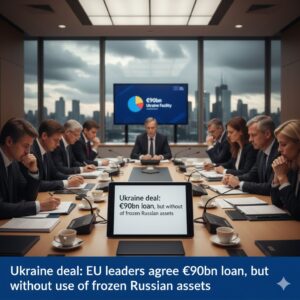
European Union leaders have reached a landmark agreement to provide Ukraine with a €90 billion interest-free loan to support Kyiv’s financial and defence needs over the next two years. The deal, finalised after marathon talks in Brussels, comes amid mounting concerns that Ukraine’s budgetary reserves could run dry in early 2026 without significant external aid. The funding package is designed to ensure that Ukraine can maintain essential government services, military operations, and economic stability while the war with Russia continues. (ITVX)
The agreement marks a decisive, though politically contentious, moment in the EU’s response to the nearly four-year war that began when Russia launched its full-scale invasion of Ukraine in February 2022. Leaders had considered several options for raising the €90 billion — including using frozen Russian central bank assets held in EU financial institutions — but ultimately rejected that approach due to legal, financial, and diplomatic concerns. Instead, the bloc will raise the funds through joint borrowing on capital markets, backed by the EU budget. (ITVX)
The loan reflects both European solidarity with Kyiv and the complexities of internal EU politics. Though nearly all member states backed the measure, Hungary, Slovakia, and the Czech Republic secured exemptions that keep them from participating in the financial guarantees behind the joint debt. (The Brussels Times)
Why the Deal Was Needed
Ukraine’s financial outlook has been deteriorating rapidly. Estimates from international institutions — including the IMF — suggest that Kyiv could need upwards of €135 billion in additional funding over the next two years just to maintain basic government and defence spending. Without external support, Ukraine risked a budget crisis as early as spring 2026. (The National)
President Volodymyr Zelenskyy had pressed European leaders to take bold action ahead of the summit, arguing that using frozen Russian assets to help fund Ukraine was both “moral” and “fair.” In a post on social media ahead of the decision, Zelenskyy warned that without a firm commitment from the EU, Ukraine could be forced to cut critical defence capabilities such as drone production — at a time when frontline battles and missile strikes continue across the country. (Reddit)
However, legal and political hurdles ultimately blocked that approach. Belgium, where the largest share of the roughly €210 billion in frozen Russian assets is held — particularly at the financial institution Euroclear — raised major concerns about the risk of legal retaliation and financial liability. Belgian leaders sought assurances from other EU states that they would share any potential liabilities if Russia successfully challenged the use of its assets in European courts. Because sufficient guarantees could not be secured, the bloc abandoned the Russian asset funding model in favour of joint borrowing. (The Brussels Times)
How the Funding Will Work
The €90 billion package will be raised through EU collective borrowing on capital markets. Member states agree to back the debt jointly, using the long-term EU budget as financial collateral. This mechanism is similar in principle to pandemic-era borrowing and represents one of the largest collective financial commitments in EU history. (ITVX)
Important points about the loan structure:
- Interest-free for Ukraine: Kyiv will not pay interest on the loan itself.
- Conditional repayment: Ukraine is expected to repay the loan only if and when Russia pays war reparations as part of any post-war settlement. In the absence of reparations, the EU expects to use frozen Russian assets as collateral to recoup costs — though only at a later date if legal and political conditions allow. (The Brussels Times)
- Participation exemptions: Hungary, Slovakia, and the Czech Republic will not participate in the funding guarantees behind the joint debt package, after negotiating opt-outs. (The Brussels Times)
The decision to link repayment to Russian war reparations was an attempt to strike a political compromise: backing Kyiv’s needs while avoiding an immediate seizure of Russian sovereign funds that could spark legal challenges or retaliatory measures. (The National)
Why Frozen Russian Assets Were Not Used Now
The use of frozen Russian central bank assets — estimated at around €210 billion and held across EU financial institutions — was at the centre of negotiations in Brussels. Proponents, including some EU Commission officials and leaders such as Germany’s Chancellor Friedrich Merz, had argued that converting these immobilised assets into a “reparations loan” for Ukraine would send a powerful message to Moscow and help fund Kyiv’s defence directly. (The Guardian)
But the proposal quickly encountered resistance:
- Legal risk: Belgium and other countries feared that Russia could successfully pursue legal claims against European banks and governments if its sovereign assets were used in this way. Russian institutions have already filed lawsuits and threatened retaliatory legal action. (Novaya Gazeta Europe)
- Diplomatic risk: Officials were concerned that tapping frozen Russian financial reserves could harm Europe’s broader financial credibility and provoke diplomatic fallout with other nations that store their foreign reserves in EU financial systems. (Reuters)
- Internal division: Some EU member governments — particularly Hungary and Slovakia — were sceptical of any move that could be seen as directly penalising Russia’s sovereign holdings, citing the risk of escalation and their own political considerations. (The Brussels Times)
As a result, EU leaders chose the joint borrowing route instead, while agreeing that the immobilised assets will remain frozen indefinitely and that the bloc may still seek ways to use them for repayment after the war or as part of reparations discussions. (Novaya Gazeta Europe)
Reactions from Kyiv and European Capitals
In Ukraine, the agreement was welcomed as a crucial lifeline. President Zelenskyy posted on social media that the funding “truly strengthens our resilience” and provides important financial security for the coming years, even if Kyiv was disappointed that frozen Russian assets were not used upfront. (The Guardian)
European leaders expressed mixed but largely supportive reactions:
- European Council President António Costa celebrated the deal as a demonstration of EU unity and resolve, saying in a post-summit statement, “We committed, we delivered.” (ITVX)
- German Chancellor Friedrich Merz said the loan “sends a clear signal” to Russian President Vladimir Putin that Europe stands with Ukraine, while noting that frozen Russian assets will stay immobilised until they can be used within legal frameworks. (The New Indian Express)
- French President Emmanuel Macron praised the decision for its legal soundness and practical approach to funding Kyiv’s needs. (Reuters)
At the same time, critics voiced concerns:
- Hungarian Prime Minister Viktor Orbán labelled the funding decision a negative step, arguing that “to give money means war,” and expressing discomfort with deeper financial involvement. Hungary — traditionally more aligned with Russia — along with Slovakia and the Czech Republic negotiated exemptions from participation. (euronews)
- Some EU policymakers and commentators argue that the bloc missed an opportunity to make Russia directly pay for the war through the use of its frozen sovereign assets, viewing the compromise as politically cautious rather than bold. (Reddit)
Russia, for its part, has seized on the EU’s retreat from using frozen assets as a diplomatic victory. Kremlin officials and Russian financial representatives described the EU’s decision as a vindication of legal norms and a defeat for what Moscow calls “illegal asset seizure.” (The National)
Legal, Financial, and Strategic Implications
The €90 billion loan deal has several broad implications:
1. Legal Precedent and Sovereign Asset Security
By choosing not to tap into frozen Russian assets directly at this stage, EU leaders avoided a potentially unprecedented legal confrontation over sovereign asset rights. This preserves confidence among foreign reserve holders in the safety of EU financial systems — a key consideration for countries that store reserves in the eurozone. (Reuters)
2. EU Integration Through Joint Debt
The loan represents one of the largest joint borrowing initiatives by the EU. It signals an ongoing trend toward deeper financial integration within the bloc, building on mechanisms used during the COVID-19 pandemic. Some analysts argue this could set a precedent for future collective fiscal actions. (Reddit)
3. Long-Term Support for Ukraine
Ukraine now has a robust, legally backed financial lifeline for at least the next two years. This will be critical as Kyiv plans both defense procurement and budgetary support amid continuing hostilities. However, the funding is only one part of a broader support ecosystem that also includes U.S. aid, NATO assistance, and IMF support. (ITVX)
4. Political Signalling to Moscow
Although the EU chose not to use frozen Russian assets now, the bloc retains the legal right to pursue their use as repayment collateral or in reparations frameworks once the war concludes or in a peace settlement. Leaders emphasised that the frozen assets will remain immobilised, denying Russia access regardless of the immediate funding mechanism chosen. (Novaya Gazeta Europe)
What Happens Next?
EU officials said that discussions will continue on how to leverage frozen Russian assets in the future, potentially through a “reparations loan” or legal settlement after the war. For the immediate period, Ukraine’s financing gap for 2026–27 will be covered substantially by this €90 billion package, with additional aid from Western partners expected to supplement it. (ITVX)
Domestically within the EU, policymakers now face the task of implementing the joint debt mechanism, ensuring transparency and fiscal discipline, and managing political divisions that surfaced during the negotiations — especially with member states that opted out of participation. (The Brussels Times)
The long conflict between Russia and Ukraine shows no signs of ending soon; Ukrainian officials and military analysts maintain that continued financial and military backing from Europe will be key to Kyiv’s sustained resistance. EU leaders have signalled that while the bloc’s approach may be cautious, its commitment is firm — even as debates over the best mechanisms for support continue. (The Guardian)
In summary: EU leaders agreed to a €90 billion loan for Ukraine to cover its needs in 2026–27, choosing joint EU borrowing over an immediate use of frozen Russian assets due to legal and political concerns. The funds will be interest-free and tied to future reparations, with the immobilised Russian reserves remaining frozen and potentially available as repayment collateral in the future. The deal reflects both European unity and division, significant strategic implications, and a major moment in the EU’s evolving role on the world stage. (ITVX)